Grenzen – An Atlas of Geopolitical Borders
An award-winning information design project mapping geopolitical borders using GeoJSON and historical boundary data.
Problem
Geopolitical borders exist in wildly different forms but are rarely compared directly. Most representations focus on a handful of visible examples while the broader picture stays abstract.
Solution
A printed atlas and interactive map built from original research, classifying natural and artificial borders through a consistent editorial and visual system.
Outcome
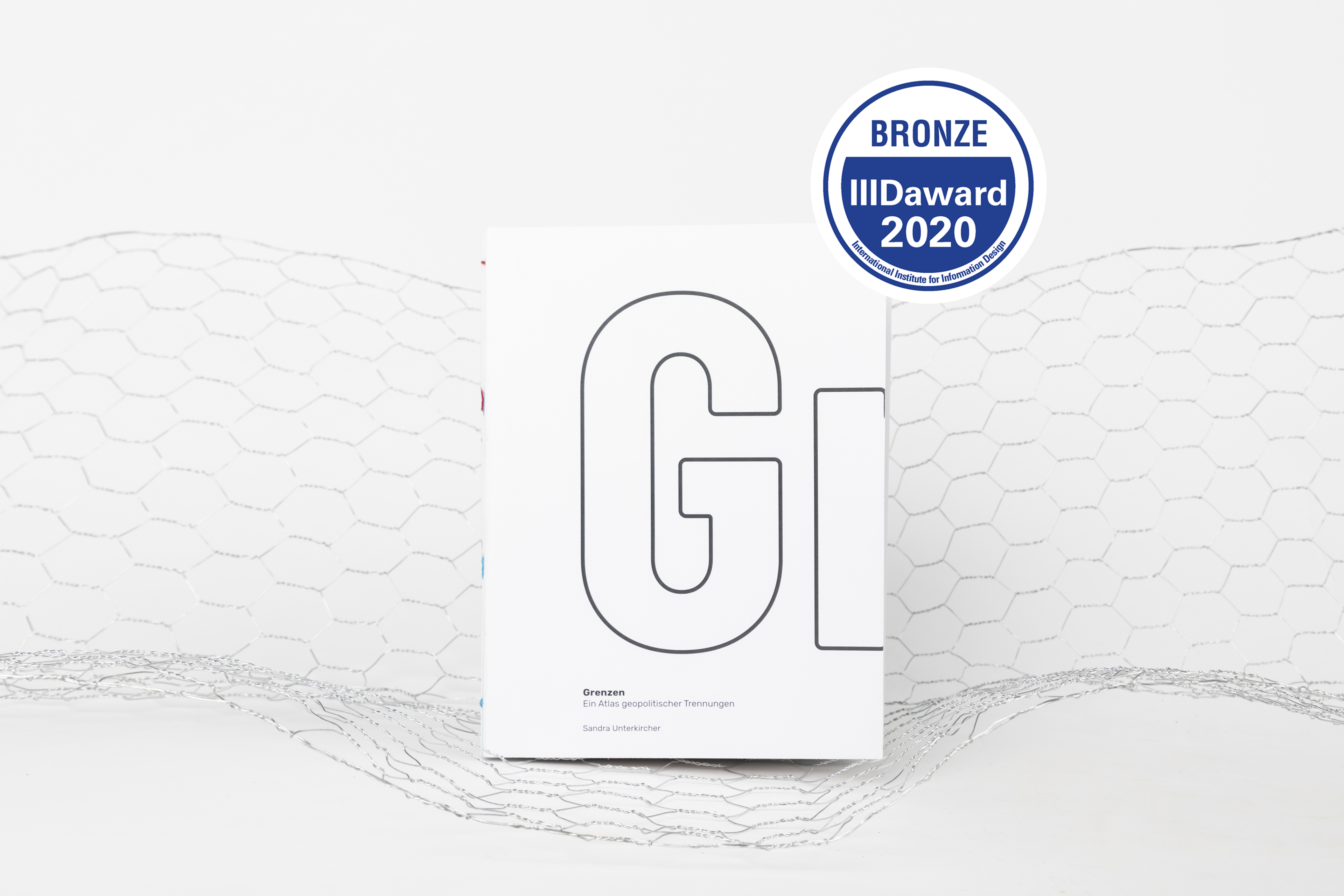
Bronze IIID Award 2020. Exhibited in the best bachelor projects showcase. Physical atlas and functional interactive map built with p5.js and GeoJSON.
Context
Borders are often discussed as fixed lines on a map, but in practice they take many forms: oceans, rivers, mountain ranges, deserts, countries, fences, and walls. The project began with the observation that public attention often focuses on a few highly visible examples, such as the US–Mexico wall, while the broader range of geopolitical borders remains difficult to compare or even see clearly. The aim of the project was to visualize these borders and make them more understandable through a wide range of facts and visual comparisons.
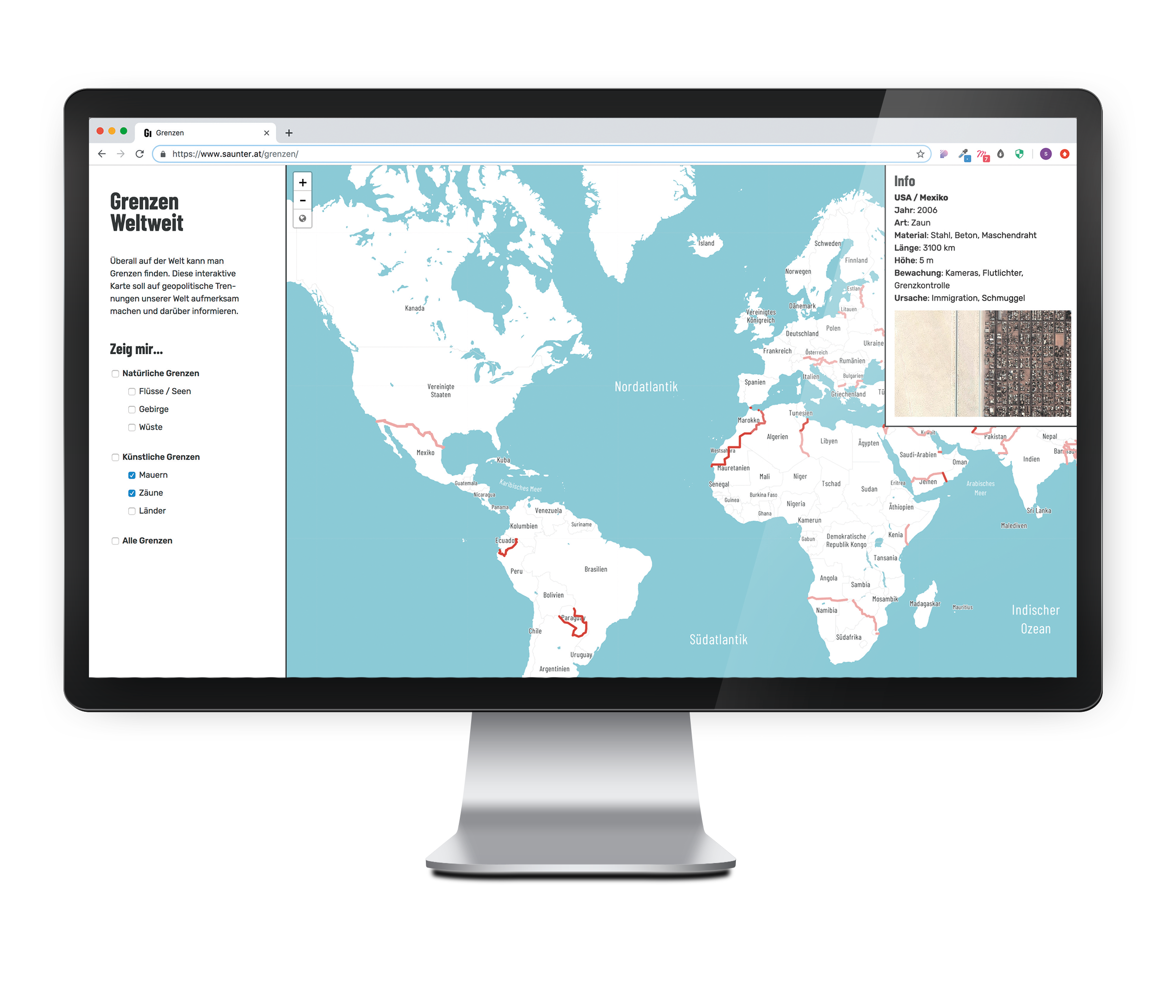
I designed the project as two connected outputs. The book offers a curated, structured reading experience focused on comparison, scale, and classification. The digital map extends the project into a more exploratory format, allowing users to navigate border data interactively and access additional contextual information.
Challenge
The design challenge was not simply to “show borders.” It was to make an abstract geopolitical topic understandable without reducing it to a single type of map or a only textual explanation.
- Borders exist in very different forms, making them hard to compare directly
- The topic combines geography, politics, history, and infrastructure, which can quickly become visually overwhelming
- Some aspects are better understood through slow, editorial explanation, while others benefit from interactive exploration
Inspiration
The idea came to me while crossing the Austrian-German border by foot over a bridge.
This specific border is extremely easy to pass – you barely even notice that you are entering a different country. I started to wonder: how many people, especially in Europe, take it for granted that they can cross borders without issues? How much do they know about borders?
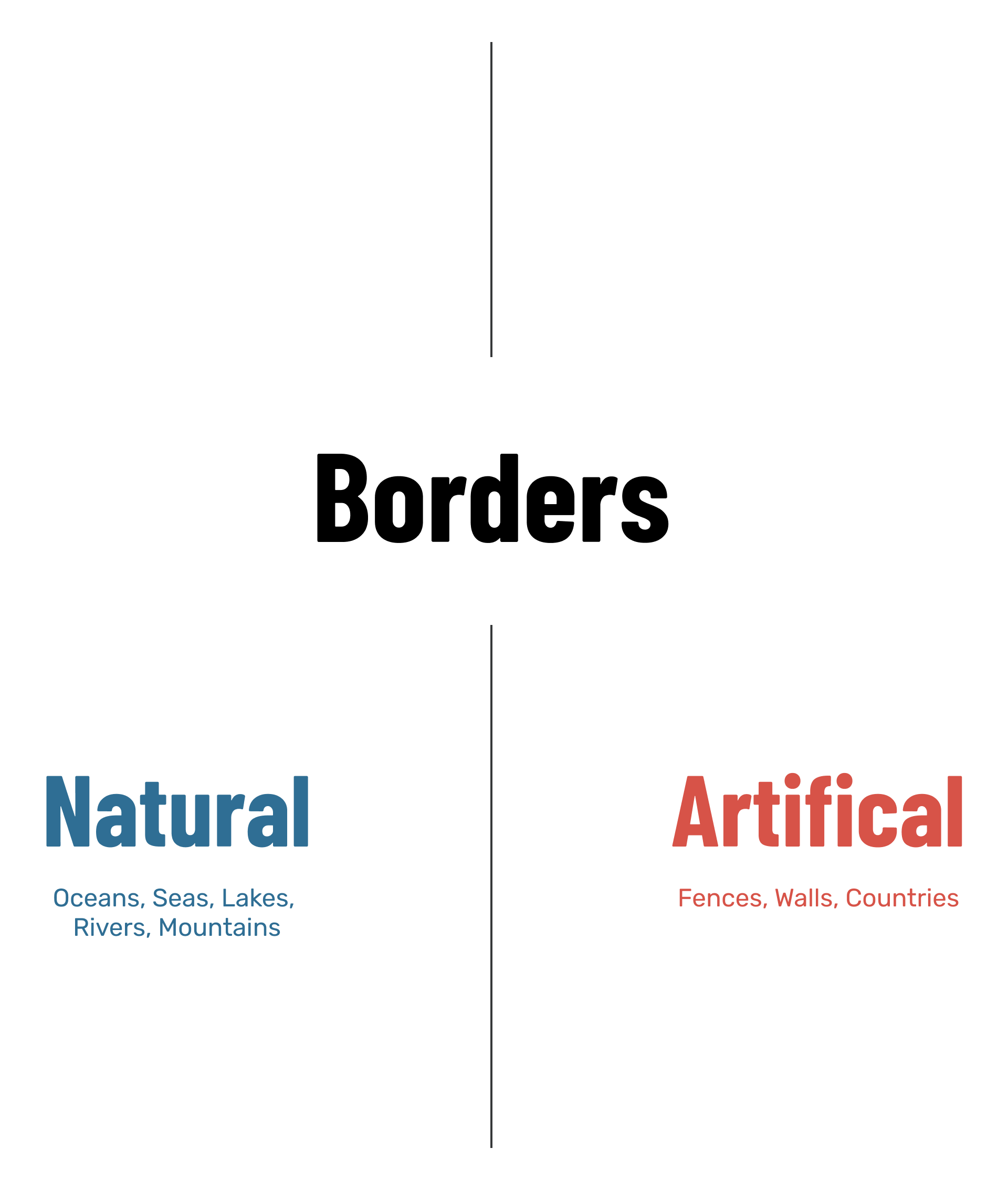
I began by collecting maps, atlases, sketches, and comparative notes to understand how borders are usually represented and where those representations fall short. Through that process, the distinction between natural and artificial borders emerged as the clearest organizing principle and became the foundation for both the book and the map.
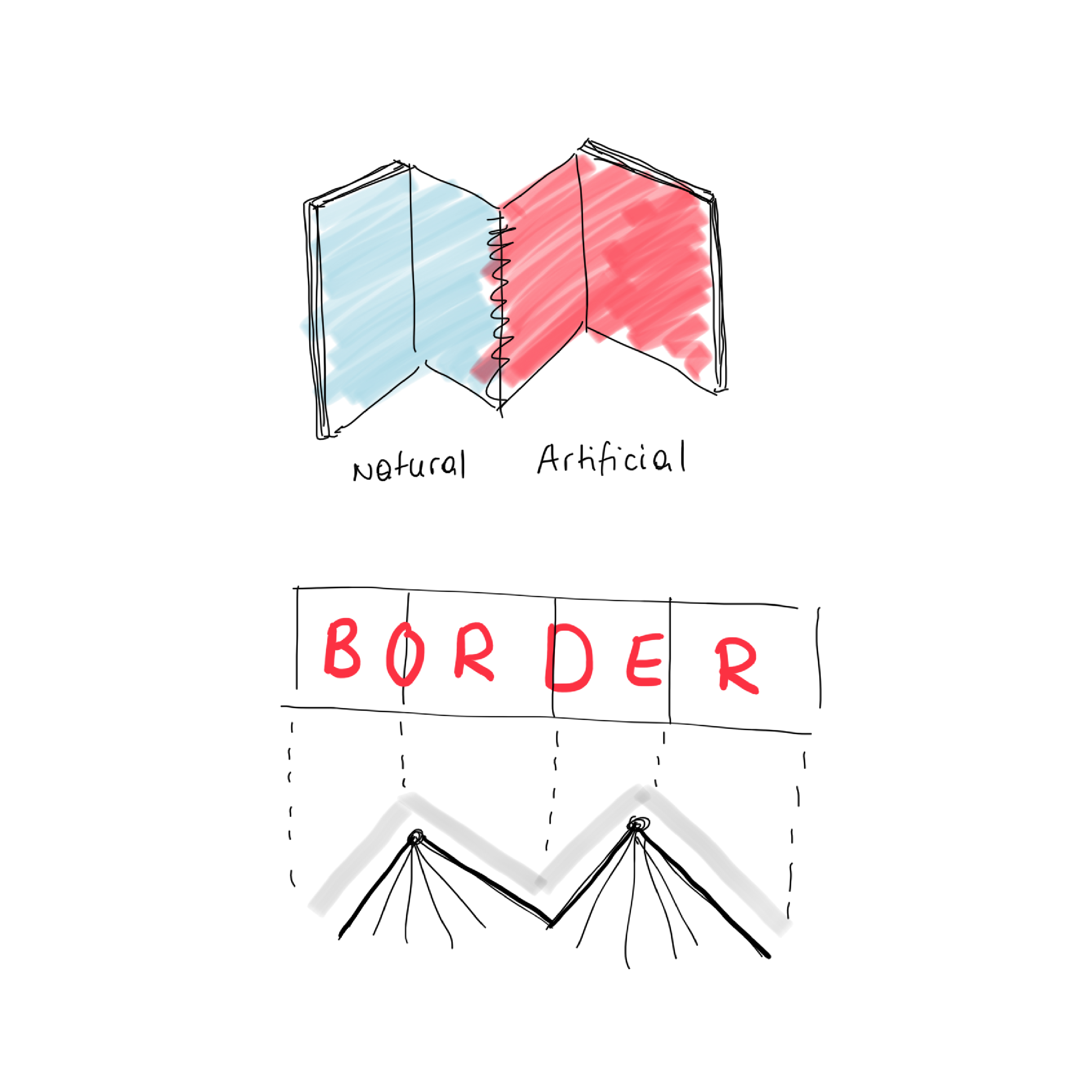
I thought about how I could take the topic of borders even further and incorporate it into my work.
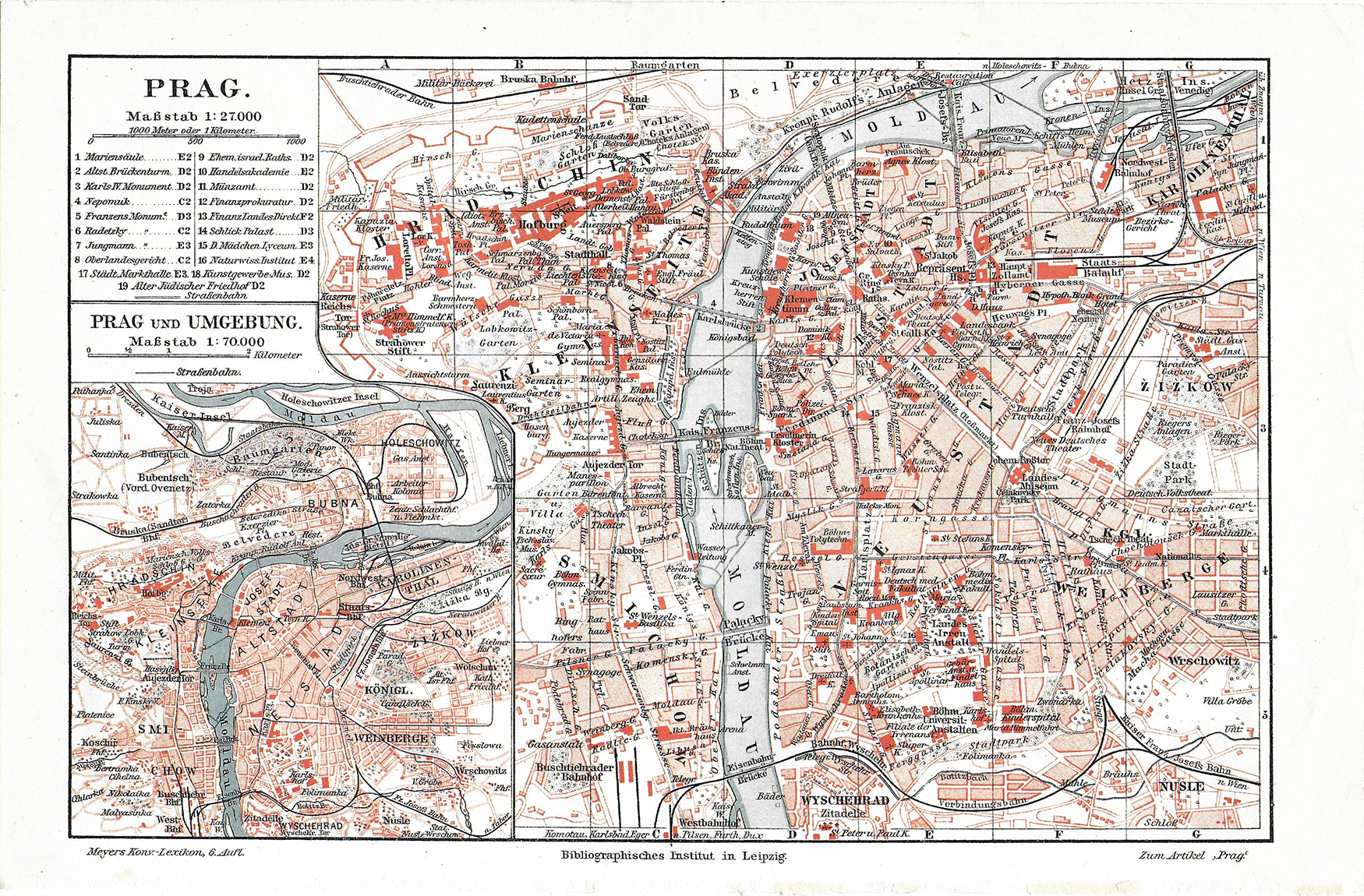
For the look of the project, I was inspired by different kinds of maps.
Approach
1. Research and classification
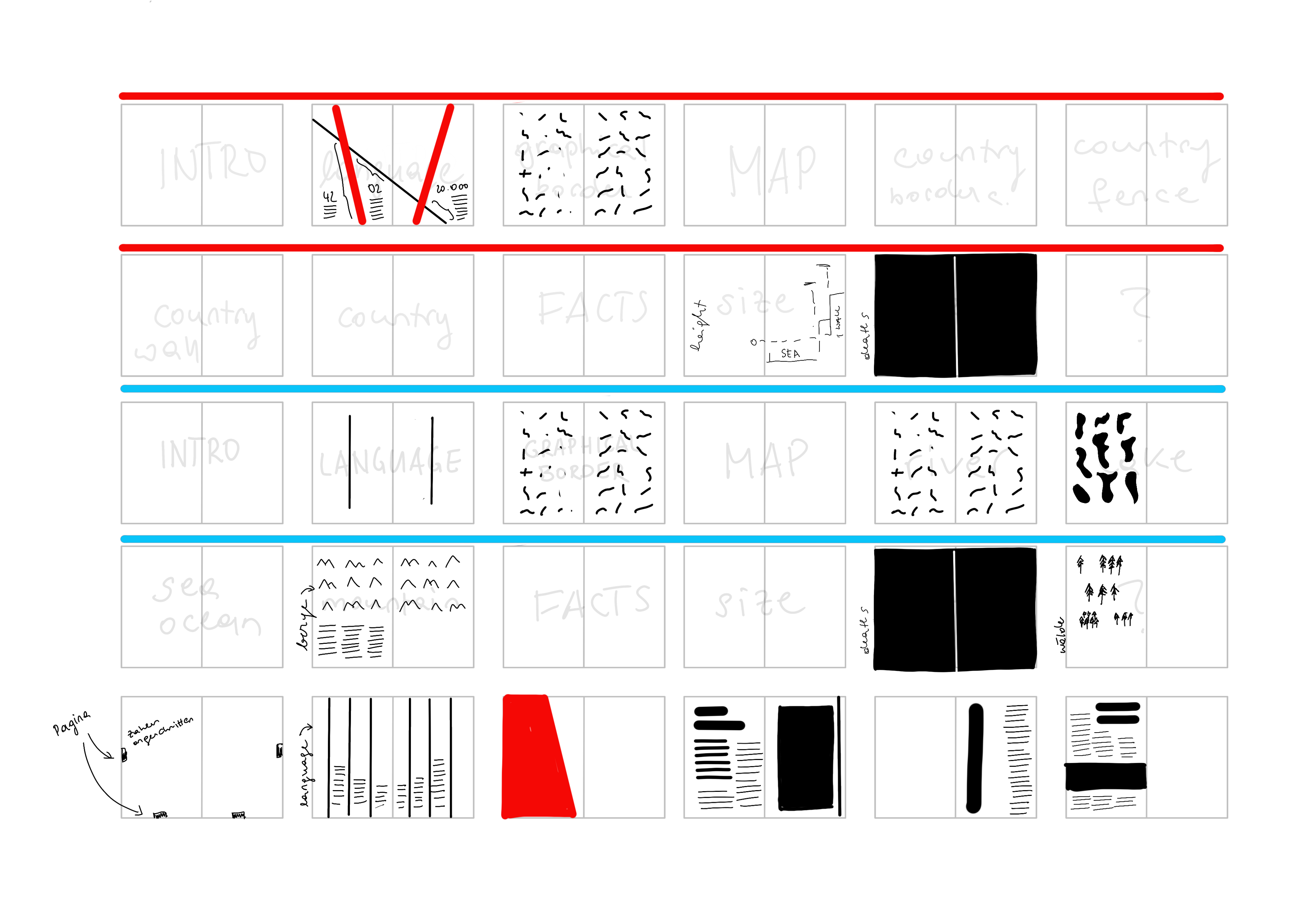
I began by collecting and organizing information about geopolitical borders from a wide range of sources, then filtering and categorizing it into a structure that could support comparison. The project documentation shows large research sheets tracking border type, material, length, height, surveillance, causes, and sources across regions worldwide.
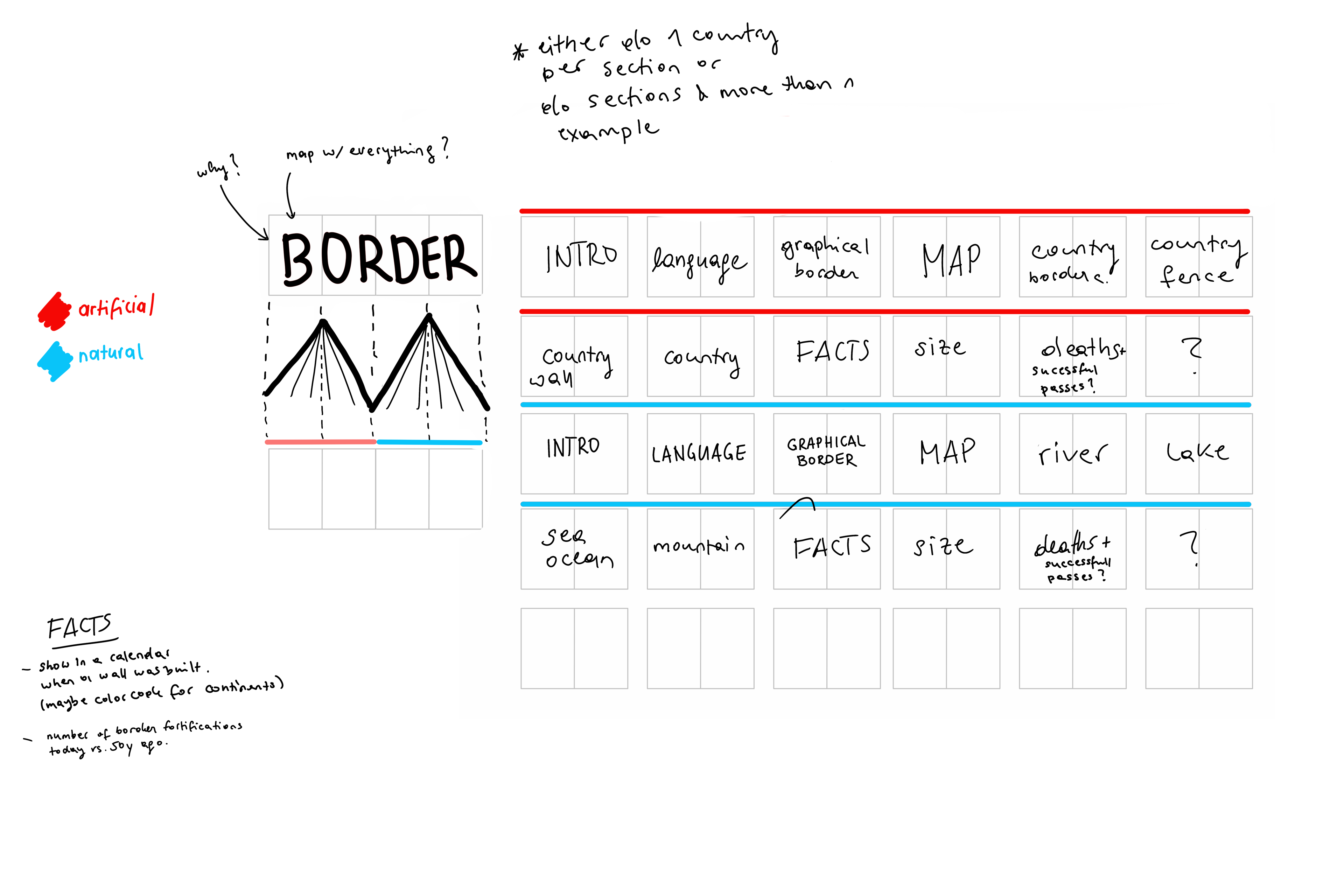
Instead of trying to create novel academic taxonomy, I used a clear design-oriented distinction between natural and artificial borders as the main organizing principle. Natural borders included oceans, seas, lakes, rivers, mountains, and deserts; artificial borders included countries, fences, and walls.
This distinction gave the project a readable conceptual spine and helped me manage a topic that could otherwise have become too diffuse.
2. Designing the editorial system
Once the structure was clear, I translated it into the book. The atlas was divided into three parts:
- natural borders
- a neutral center section containing survey results
- artificial borders
That structure did two things. It separated the major categories conceptually, and it gave the reader a rhythm: natural borders first, then a reflective break through the survey, followed by artificial borders.
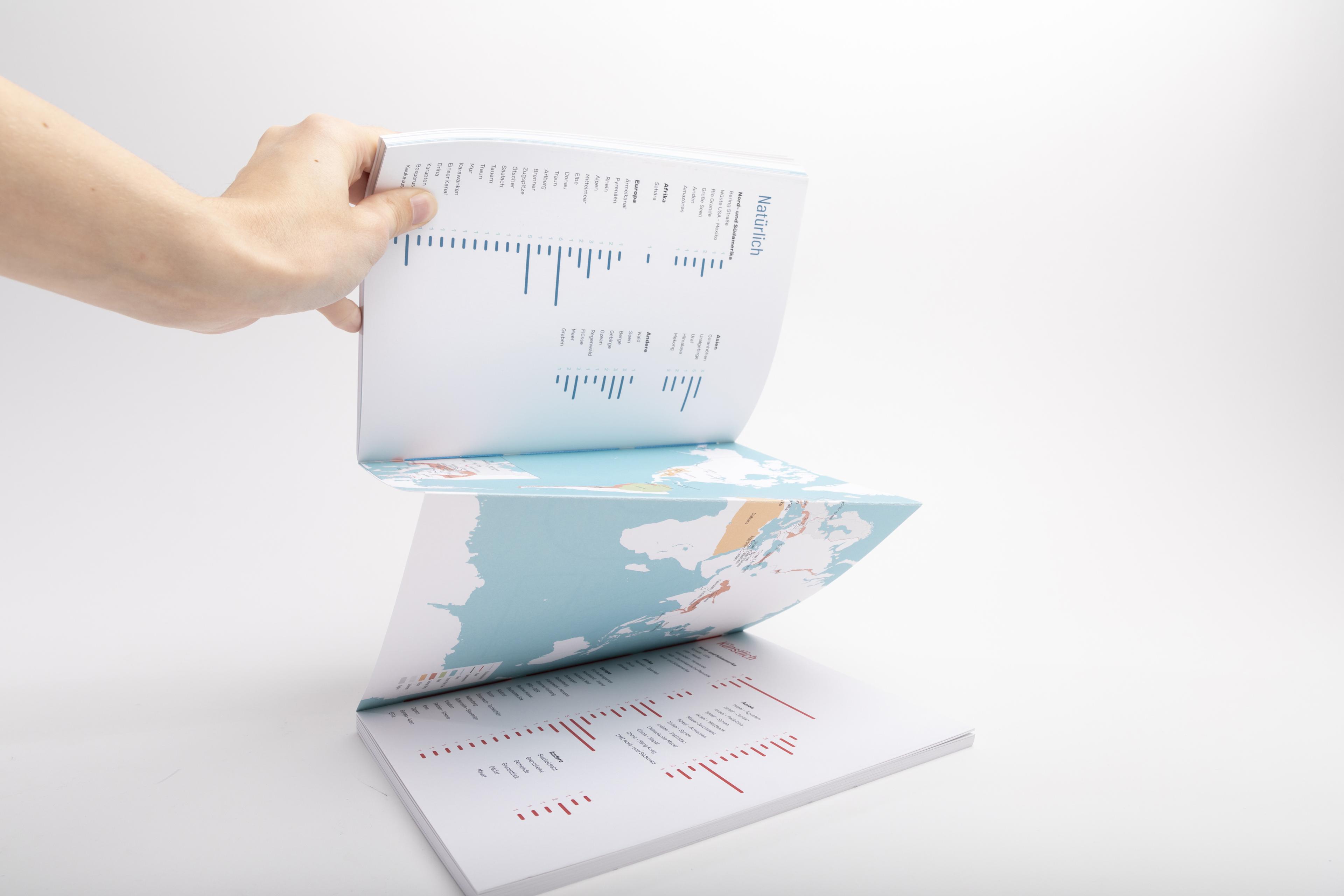
The editorial system reinforced that distinction through:
- different colours for natural and artificial borders
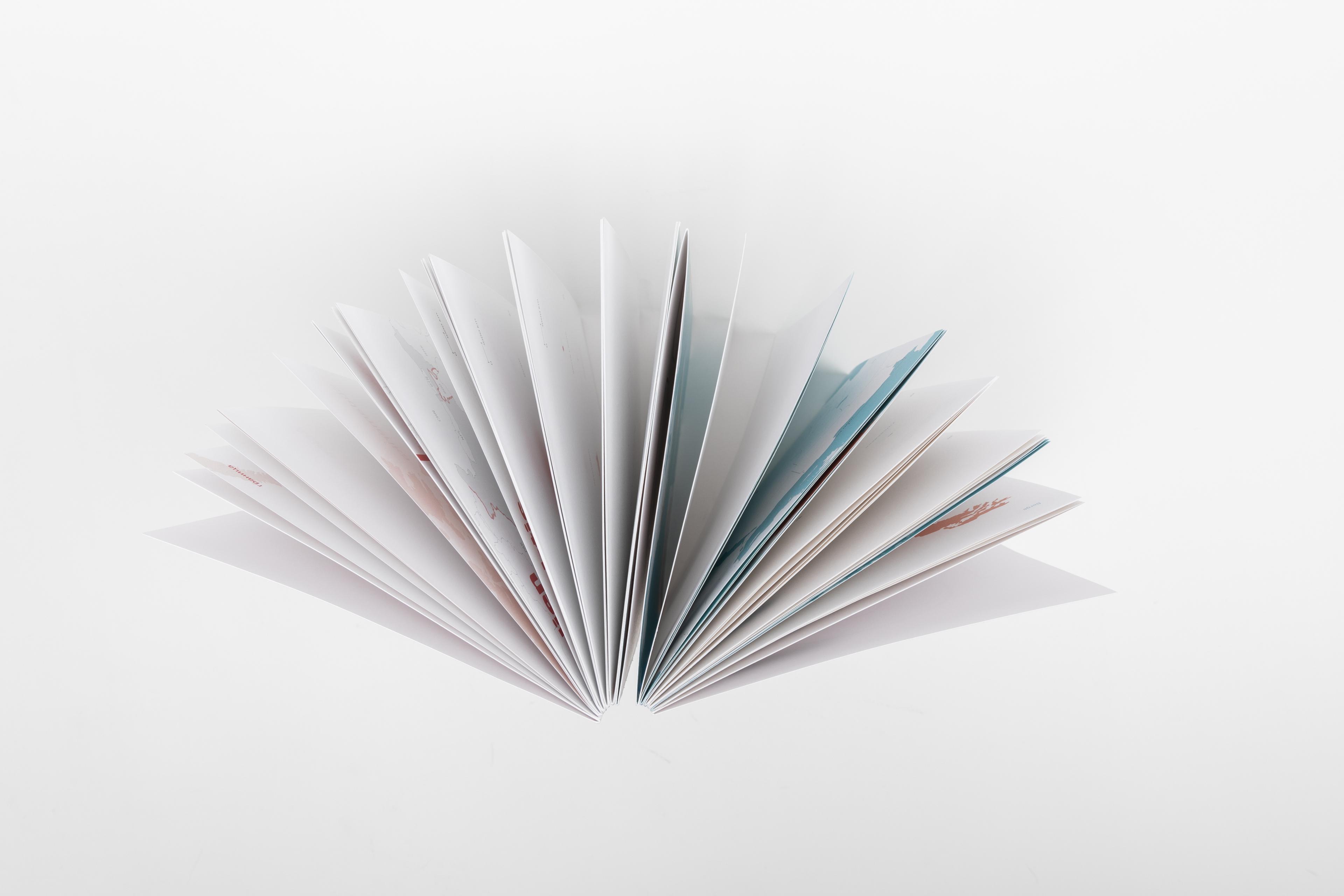
- different paper types for the sections (smooth vs. textured
- a carefully defined grid and typographic structure
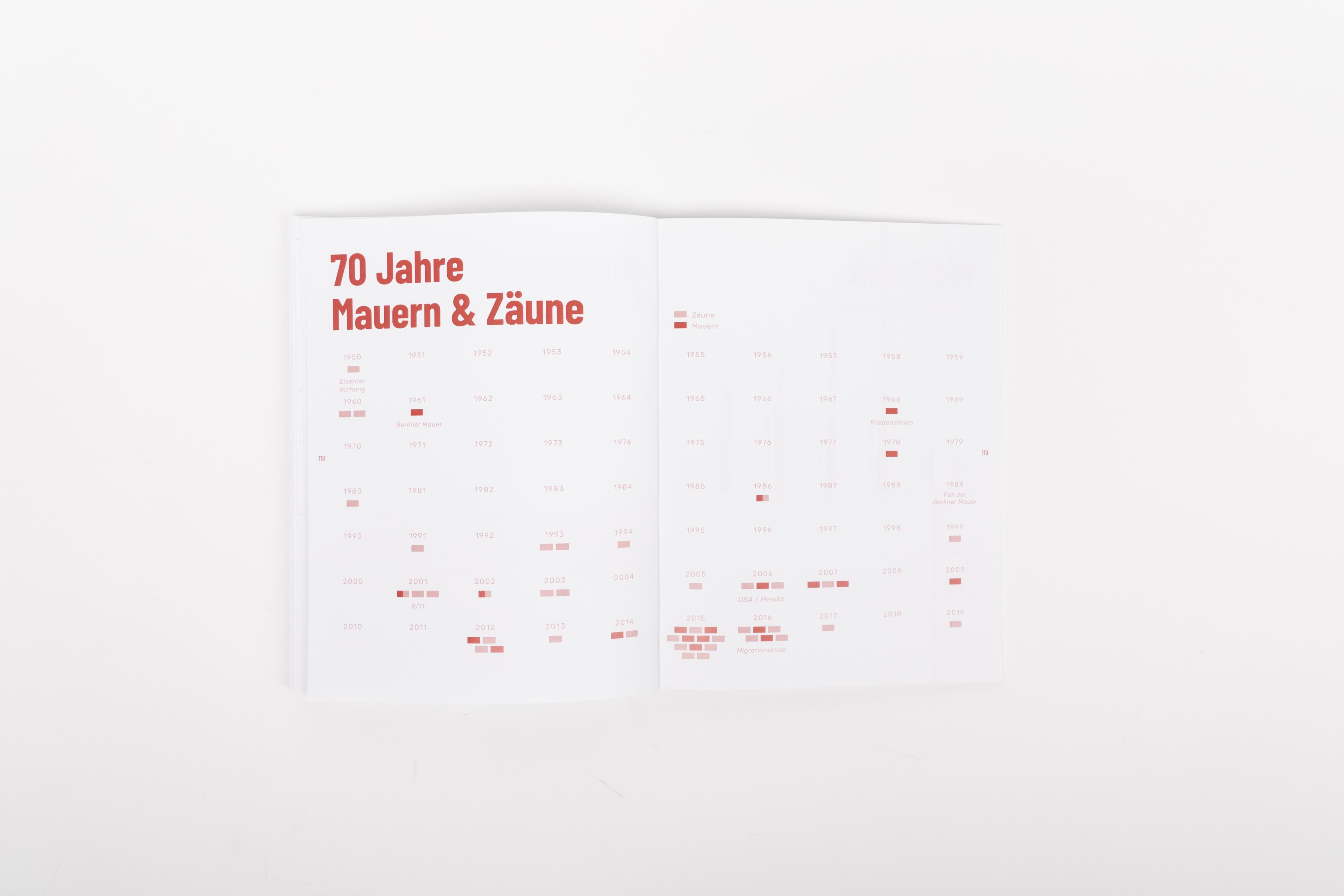
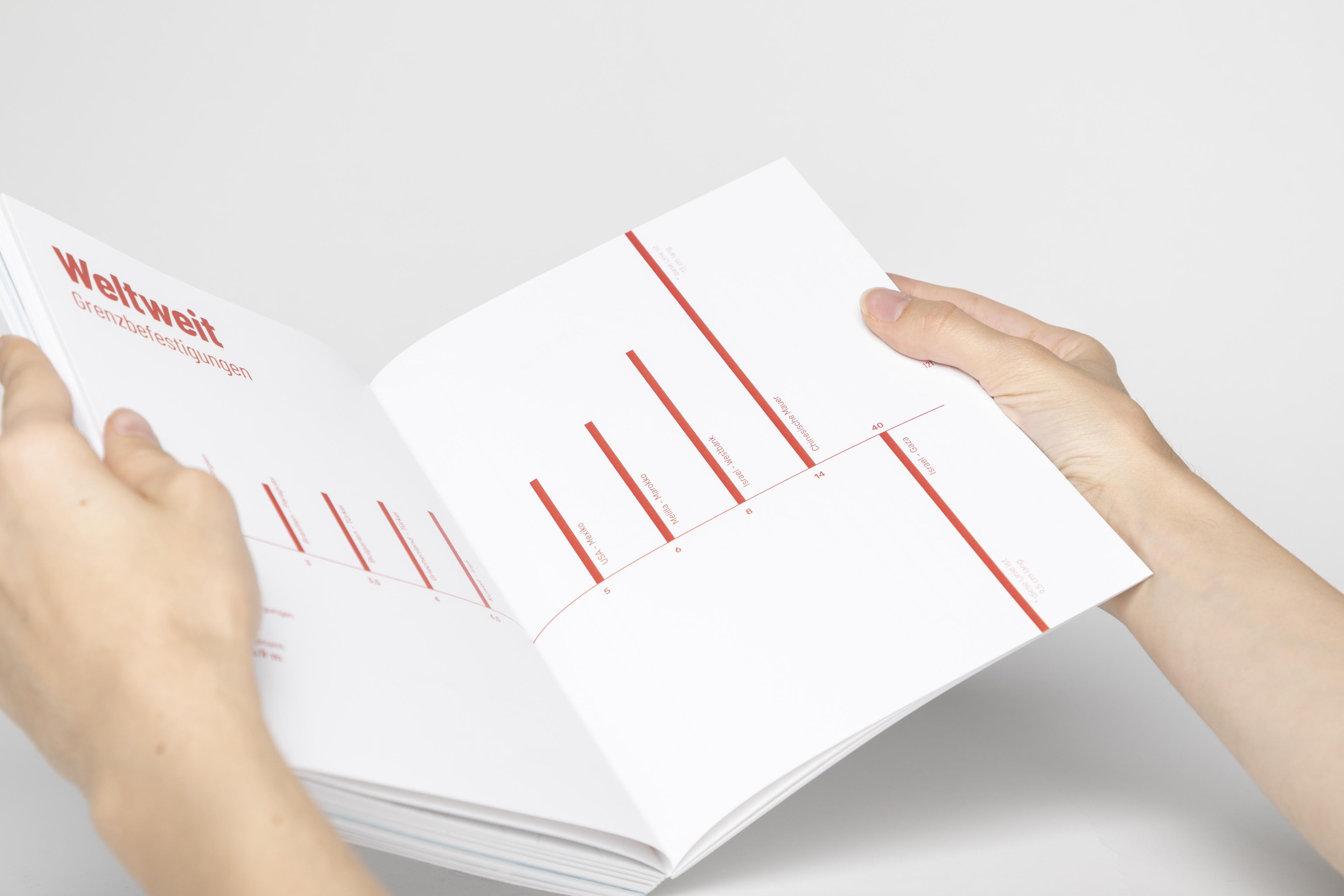
- infographics and scale cues to support comparison rather than just orientation
This was important conceptually: the book was less about geographic navigation and more about understanding the forms, scales, and consequences of different border types.
3. Using print and digital differently
The book handles narrative structure, visual hierarchy, and comparison. It allows the reader to move slowly through the classification system, see borders as designed information, and compare forms through consistent scales and infographics.
The digital map does something different. It opens the content up for exploration, letting users move through the world’s borders interactively, inspect sizes and reasons, and view additional contextual imagery. The presentation explicitly frames the digital map as a way to provide “almost endless possibilities” for interaction beyond the book.
Solution
The Book
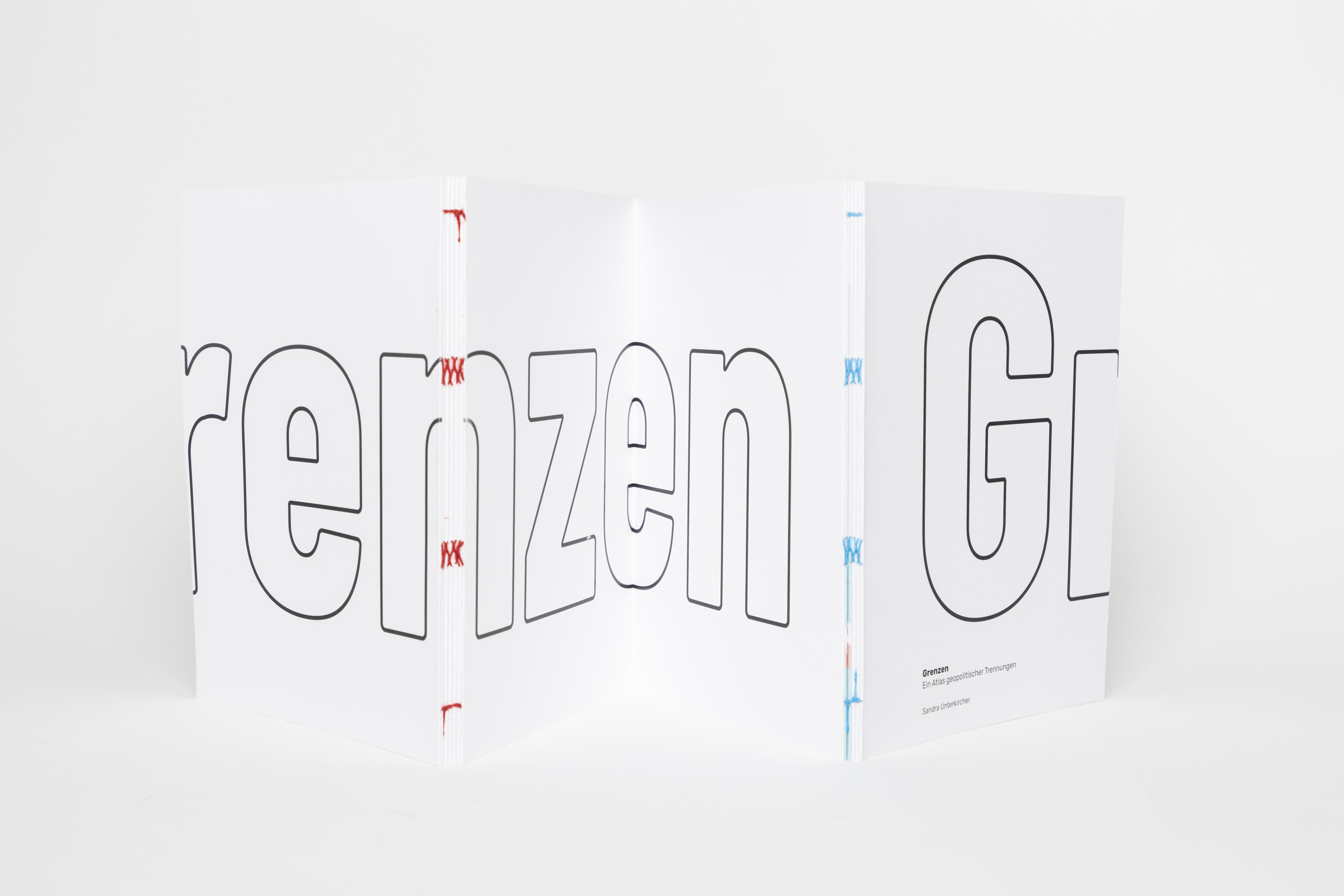
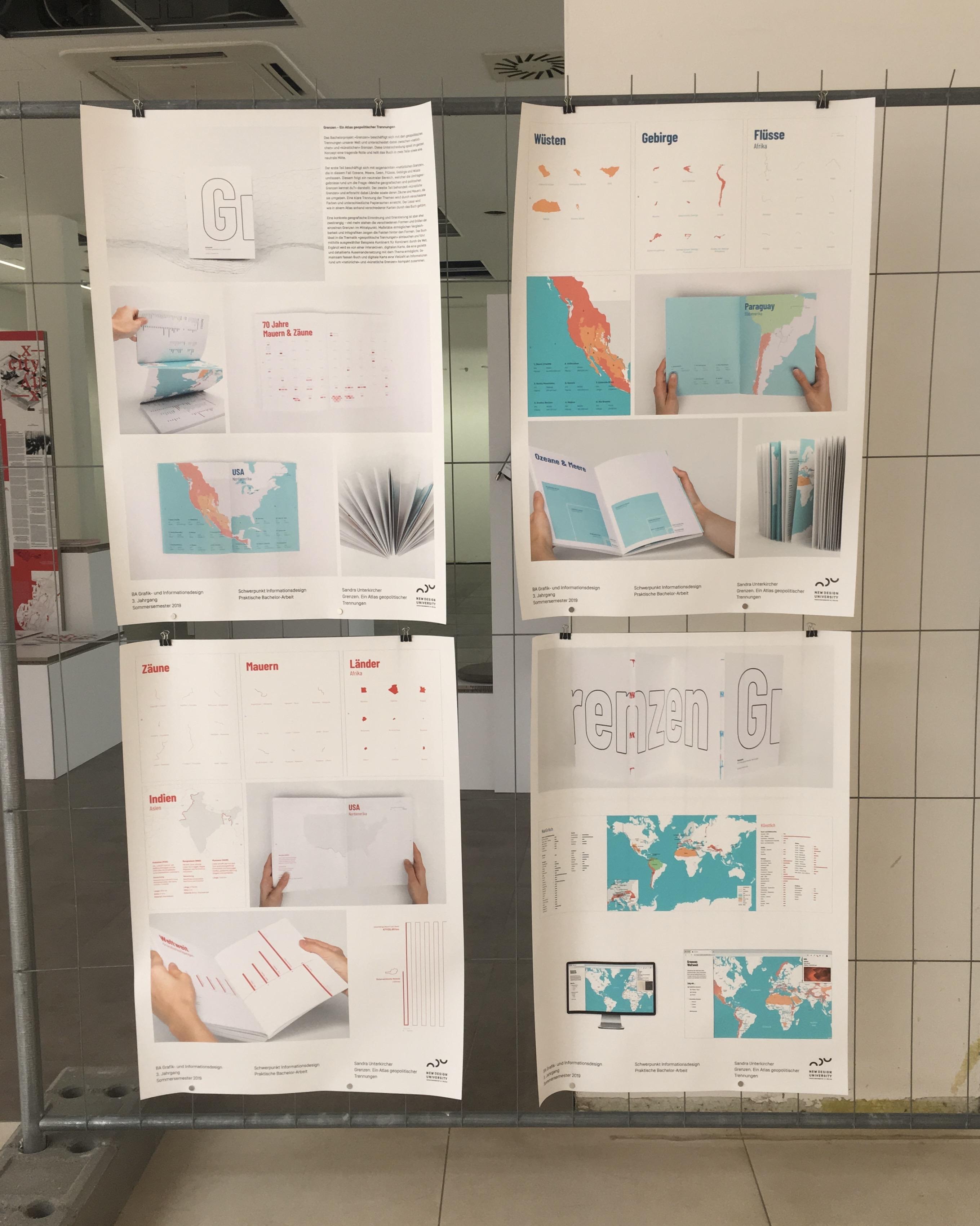
The printed atlas presents geopolitical borders through a structured editorial system that emphasizes classification, comparison, and visual clarity. Natural and artificial borders are separated formally through color and material choices, while infographics, maps, and scaled visualizations help the reader compare borders that would otherwise remain abstract.

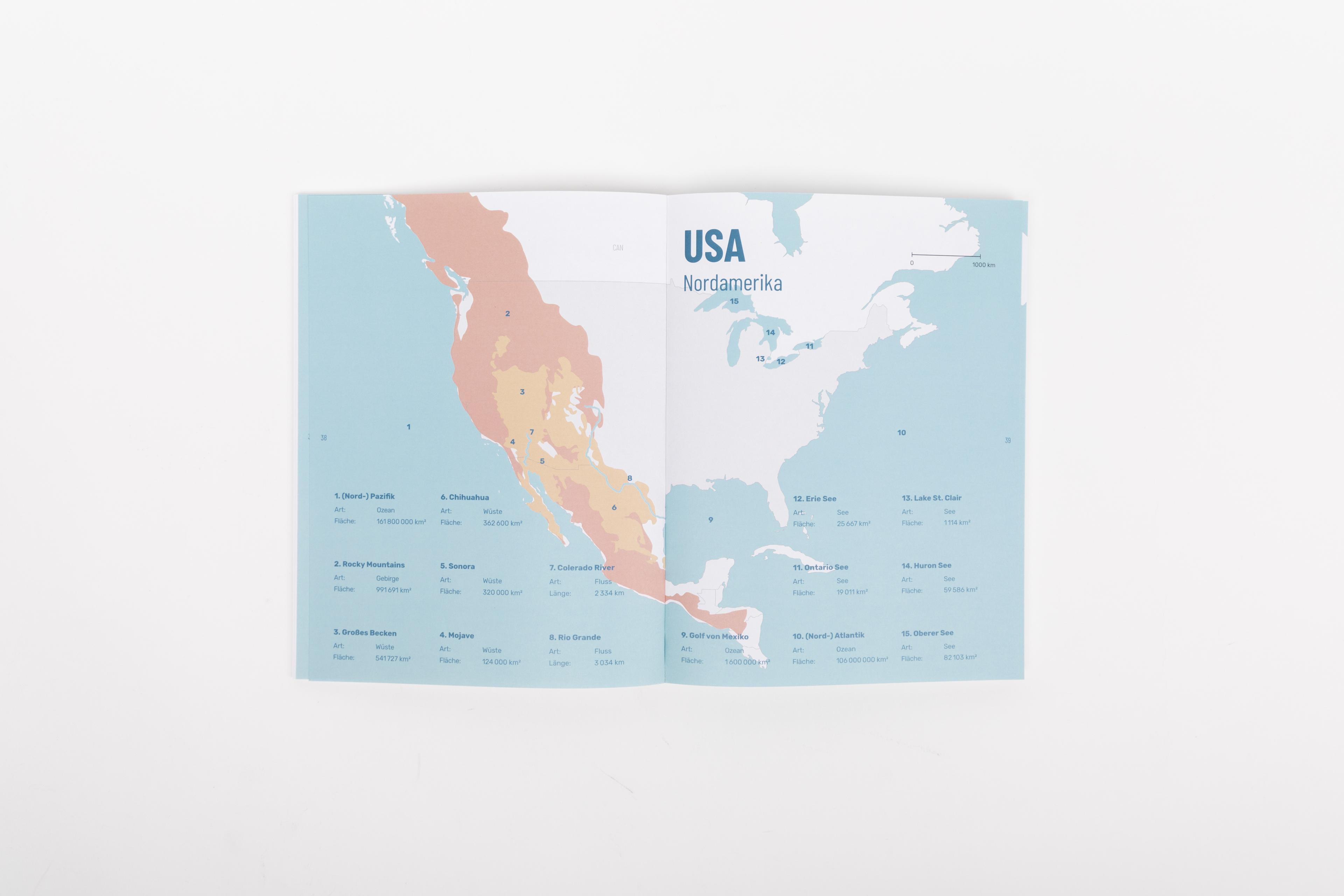
The Map
The interactive map extends the project into a more exploratory mode. Built by me using HTML, CSS, p5.js, and GeoJSON, it allows users to navigate borders globally, inspect related facts, and connect geographic form with political context. Some border geometries were also drawn and refined manually as part of the process.

Outcome
The project resulted in:
- a physical atlas
- a functional interactive map
- exhibition in the best bachelor projects showcase
- recognition through the IIID Design Award
Learnings
1. Classification is a design act.
The project only became manageable once I found a structure that was simple enough to guide the reader but flexible enough to hold very different border types.
2. Print and digital should not do the same job.
The atlas worked because the book and map served different purposes: one for editorial comparison, the other for open exploration.