5 Minutes: Turning Surroundings into Data
Turning a five-minute walk into a layered data visualisation portrait of urban experience.
Problem
Cities are experienced as overlapping layers - noise, greenery, architecture - but nearly always documented in isolation, one dataset at a time.
Solution
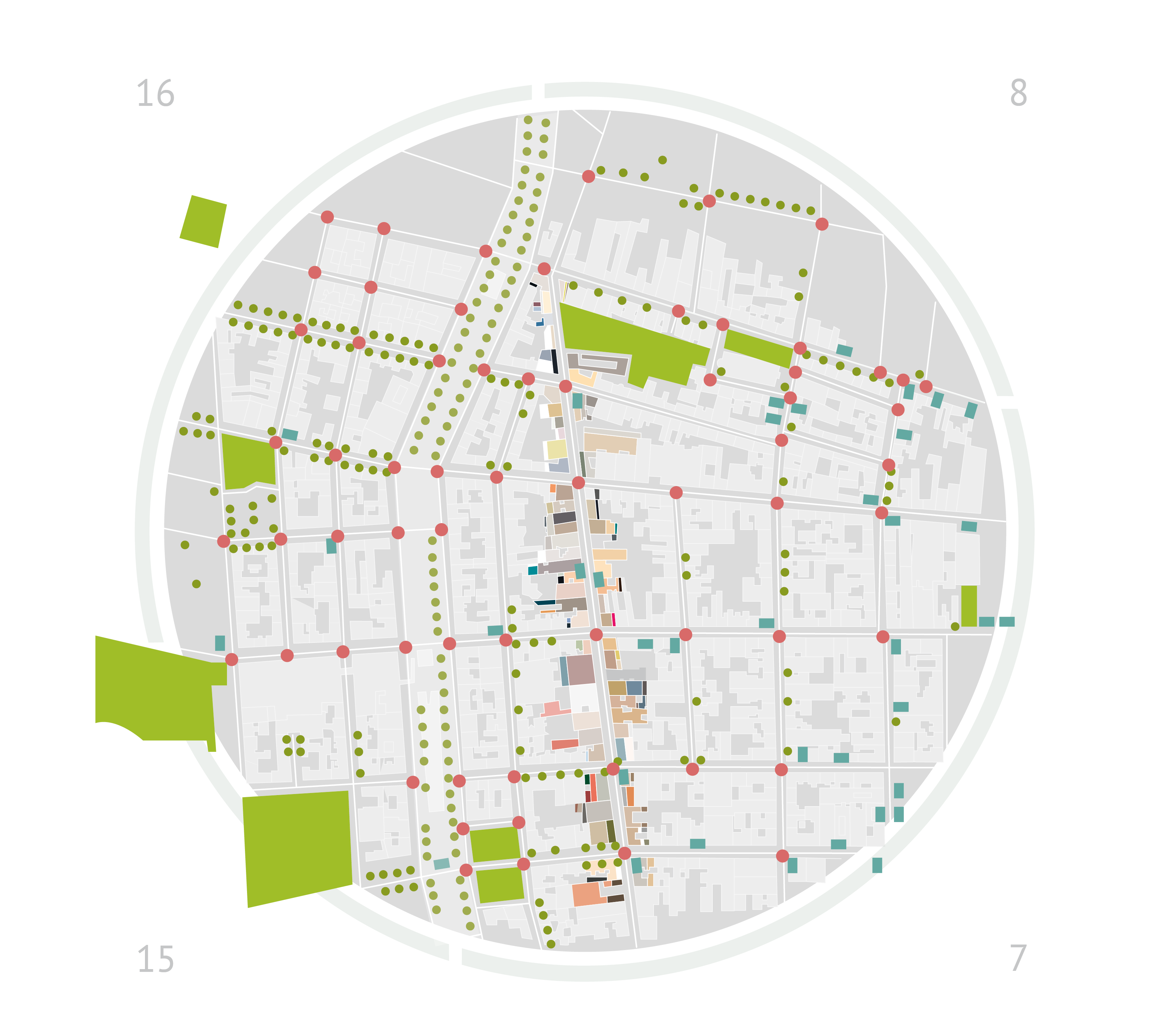
A systematic method for capturing a five-minute walking radius across three data layers, combined into a composite map and an interactive p5.js version.
Outcome
Four interconnected maps showing that urban character only becomes visible when layers are read together. Featured as part of the university's end-of-year showcase.
Context
For this university project, I explored how a five-minute walking radius could be documented and visualised as data. Rather than treating the city as a neutral map, I wanted to capture how it is actually experienced: through noise, greenery, facades, color, and atmosphere.
I translated those observations into a set of connected visualisations, including individual data layers, a final composite map, and an interactive version built with p5.js. The project focused on turning qualitative perception into a systematic visual language.
Problem
Cities are experienced as overlapping layers, but they are usually represented in isolation. Traffic, greenery, and architecture are often documented separately, even though they are felt together. The challenge was to find a way of collecting, structuring, and visualising everyday urban surroundings so that both factual information and subjective atmosphere could be communicated at once.
How can a five-minute walk be translated into layered data in a way that makes urban experience visible, comparable, and legible?
Process
I structured the project around three themes that each captured a different aspect of the walking radius.
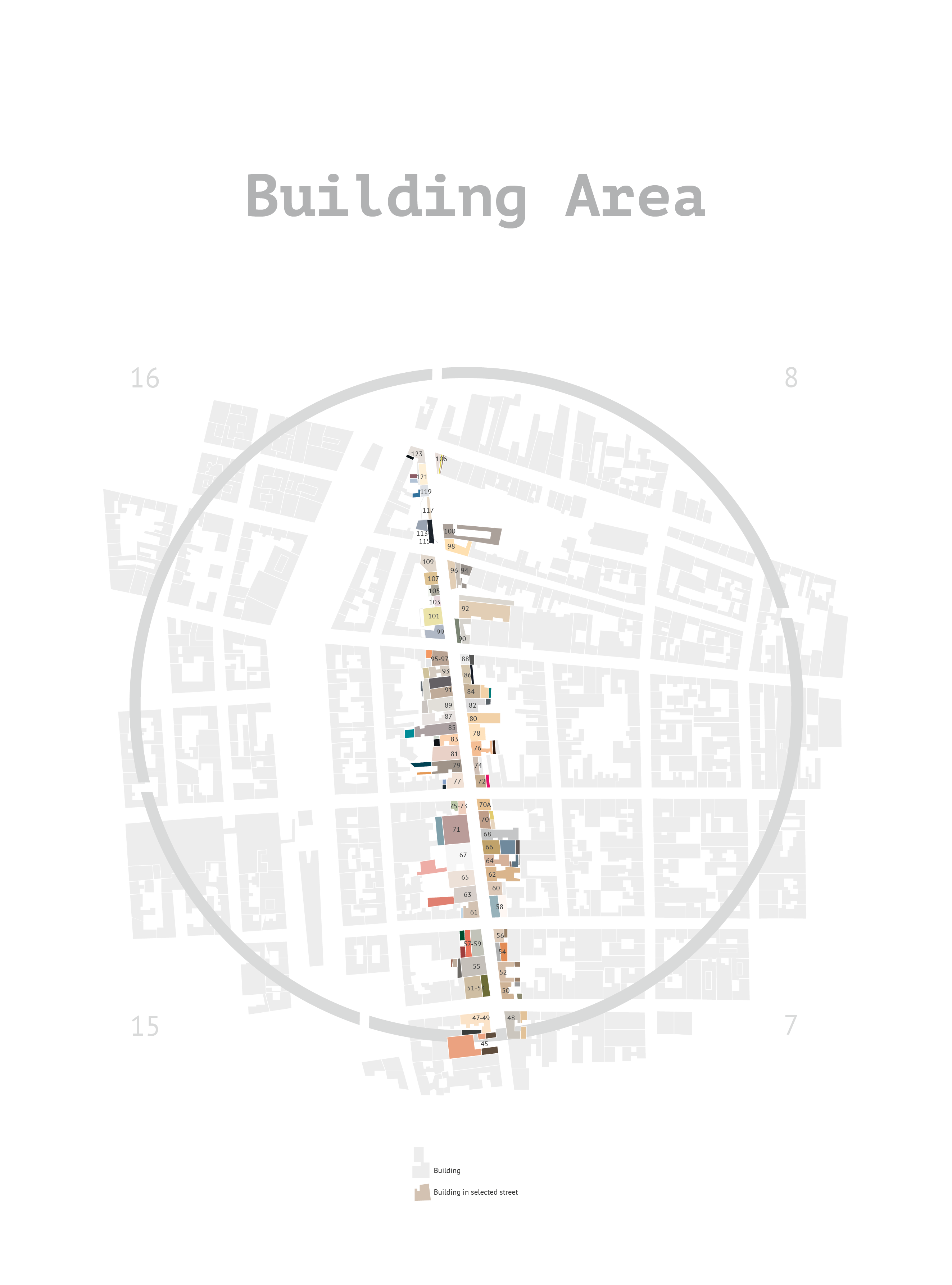
Building area
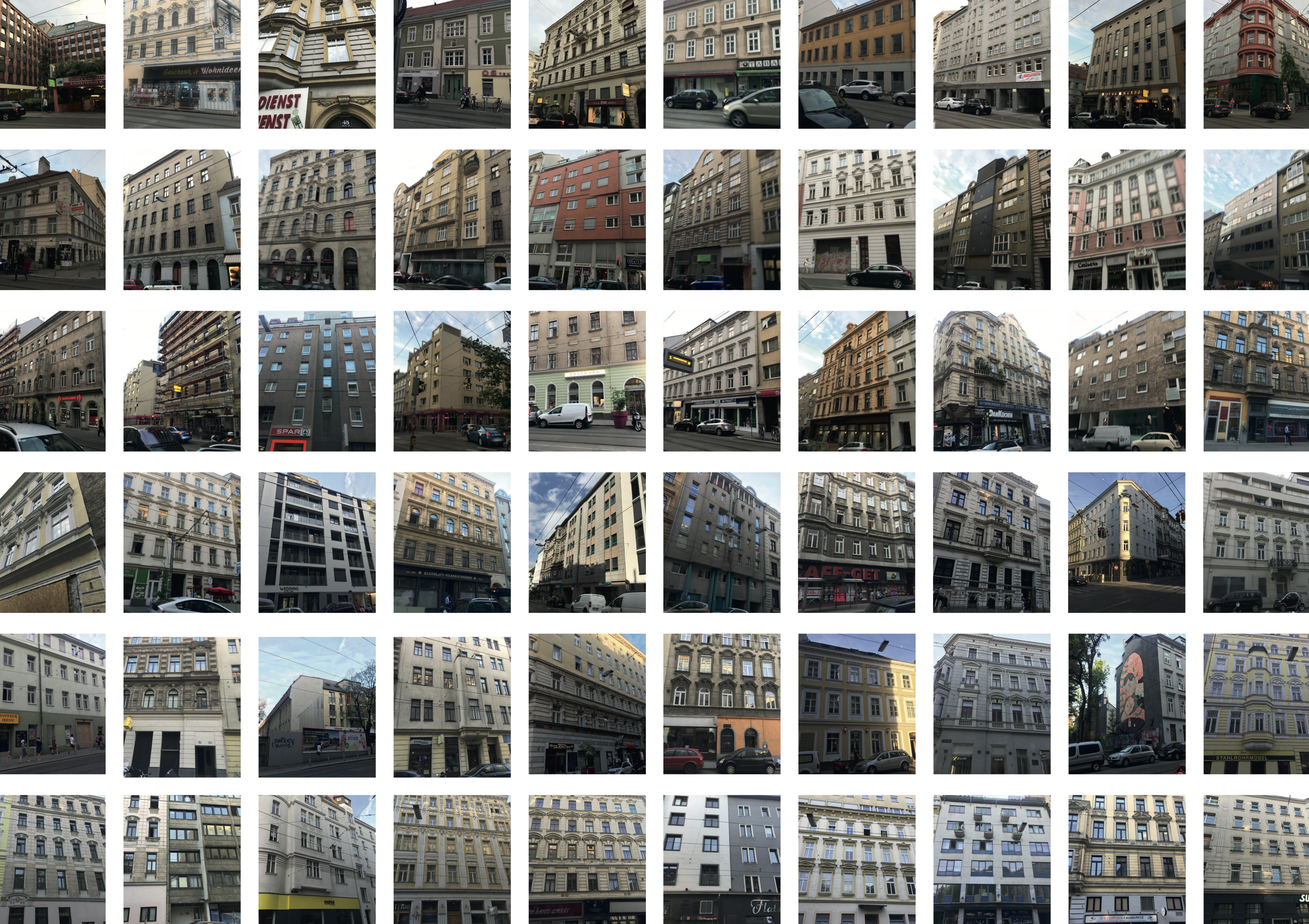
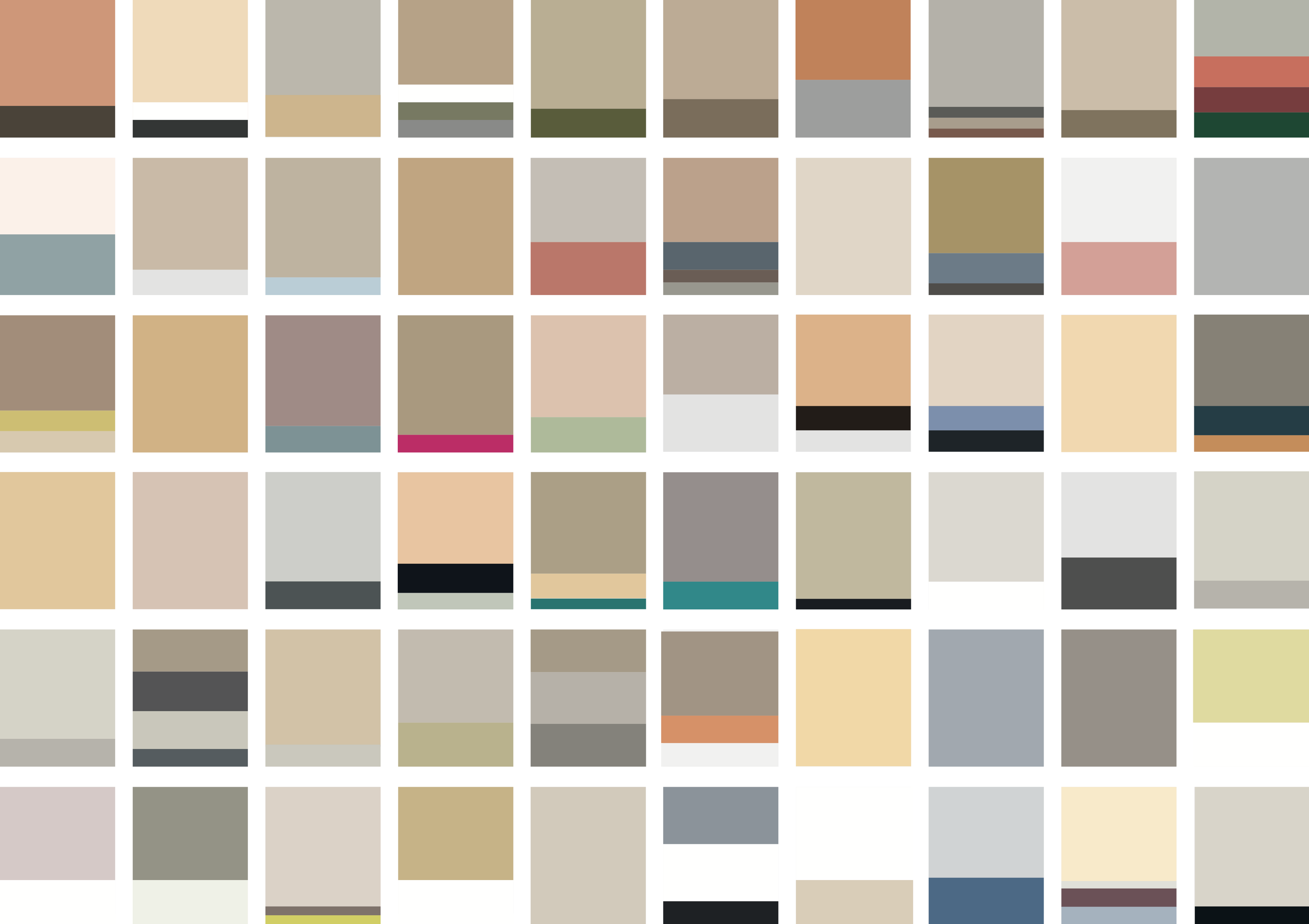
I examined the color distribution of facades within the five-minute radius, looking at the percentage share of different colors across buildings. I was particularly interested in relationships between old and new buildings, residential and commercial areas, and the average color character of different parts of the district.
To collect the material, I used my iPhone camera with geotagging enabled, then extracted color values from the photographs with a digital pipette.
Traffic area
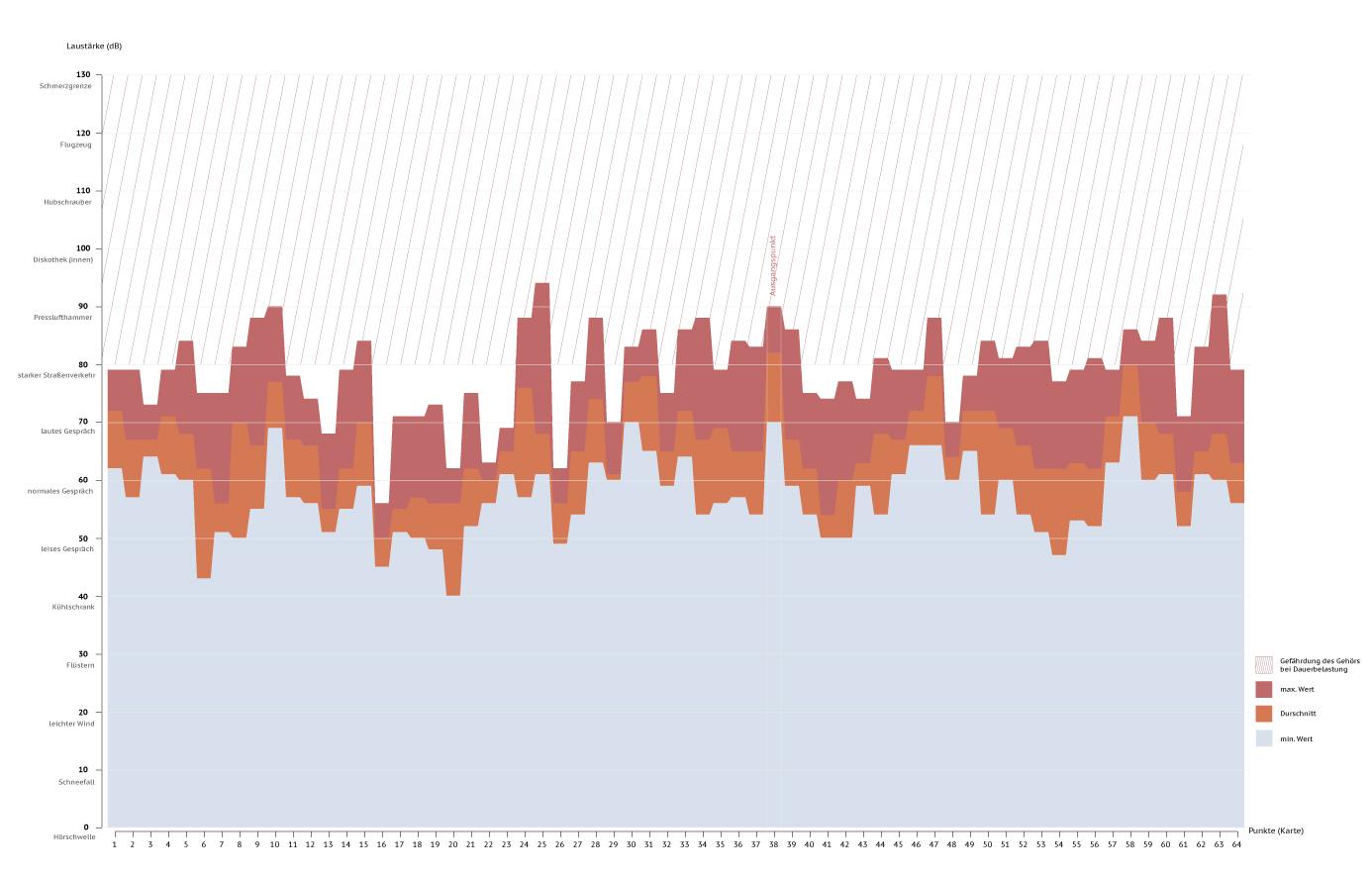
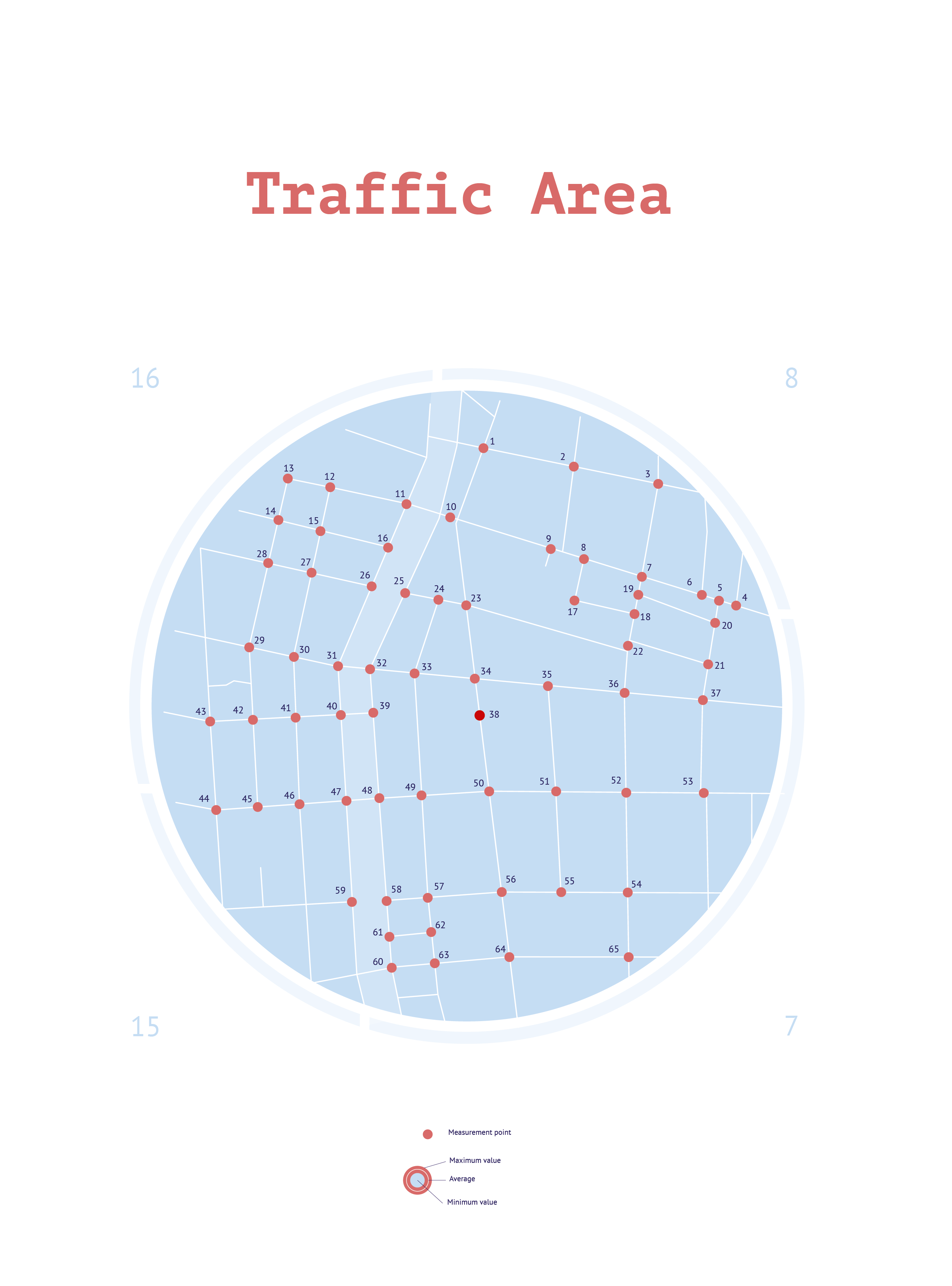
This layer focused on loudness and its relationship to traffic conditions. I measured sound levels at fixed points using the dB Meter app, which allowed me to export the data as CSV and compare average noise levels across the area.
I also tested a more experimental method by measuring noise continuously at intersections, allowing me to visualize sound as a spatial condition rather than a single reading. This helped me examine questions such as whether streets with tram tracks were generally louder, and whether the area became quieter farther away from one of the main roads. I also built an interactive version of the map in p5.js, which made it possible to explore the layers dynamically and connect the data to a more immediate experience of place.
Green space
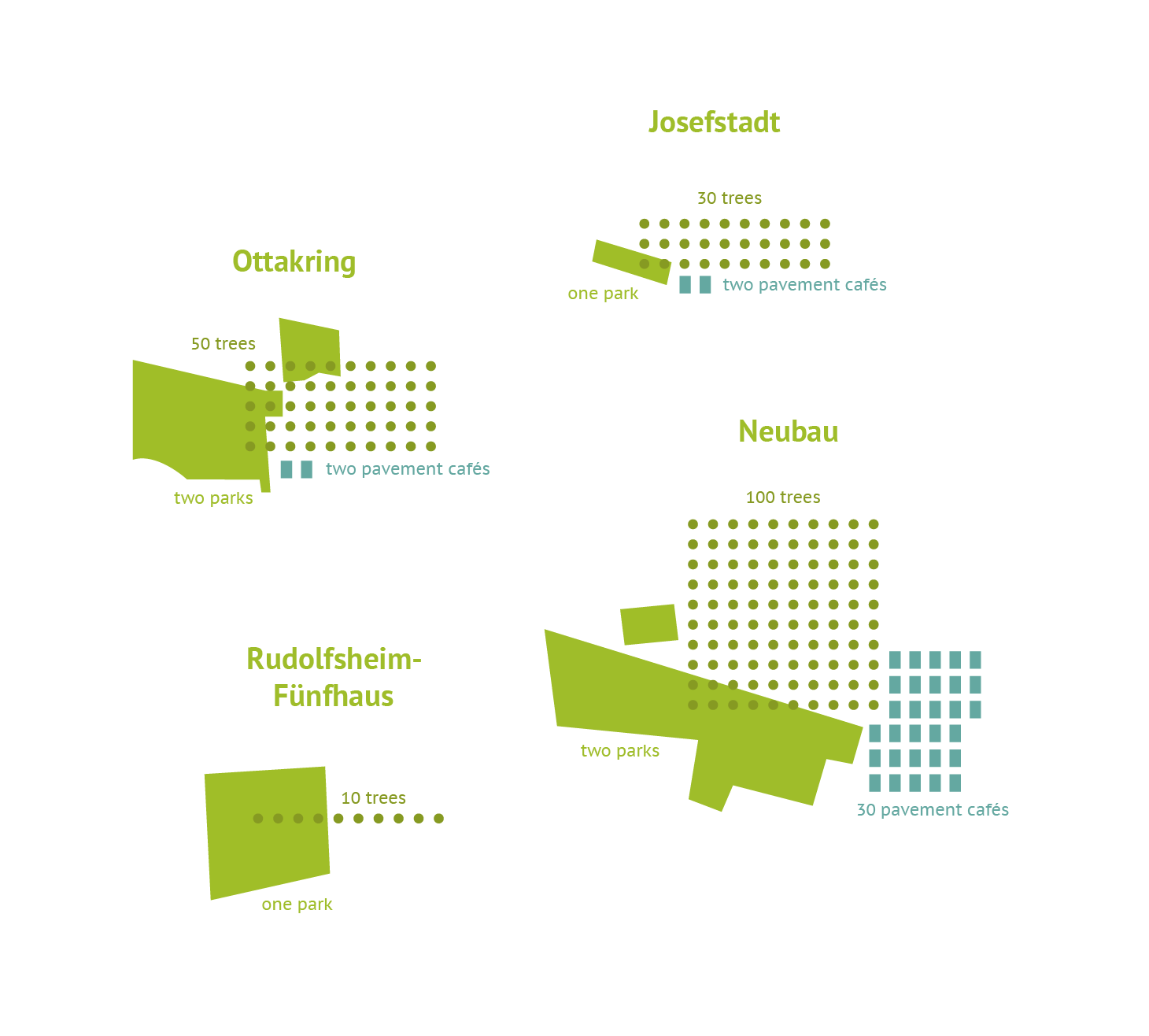
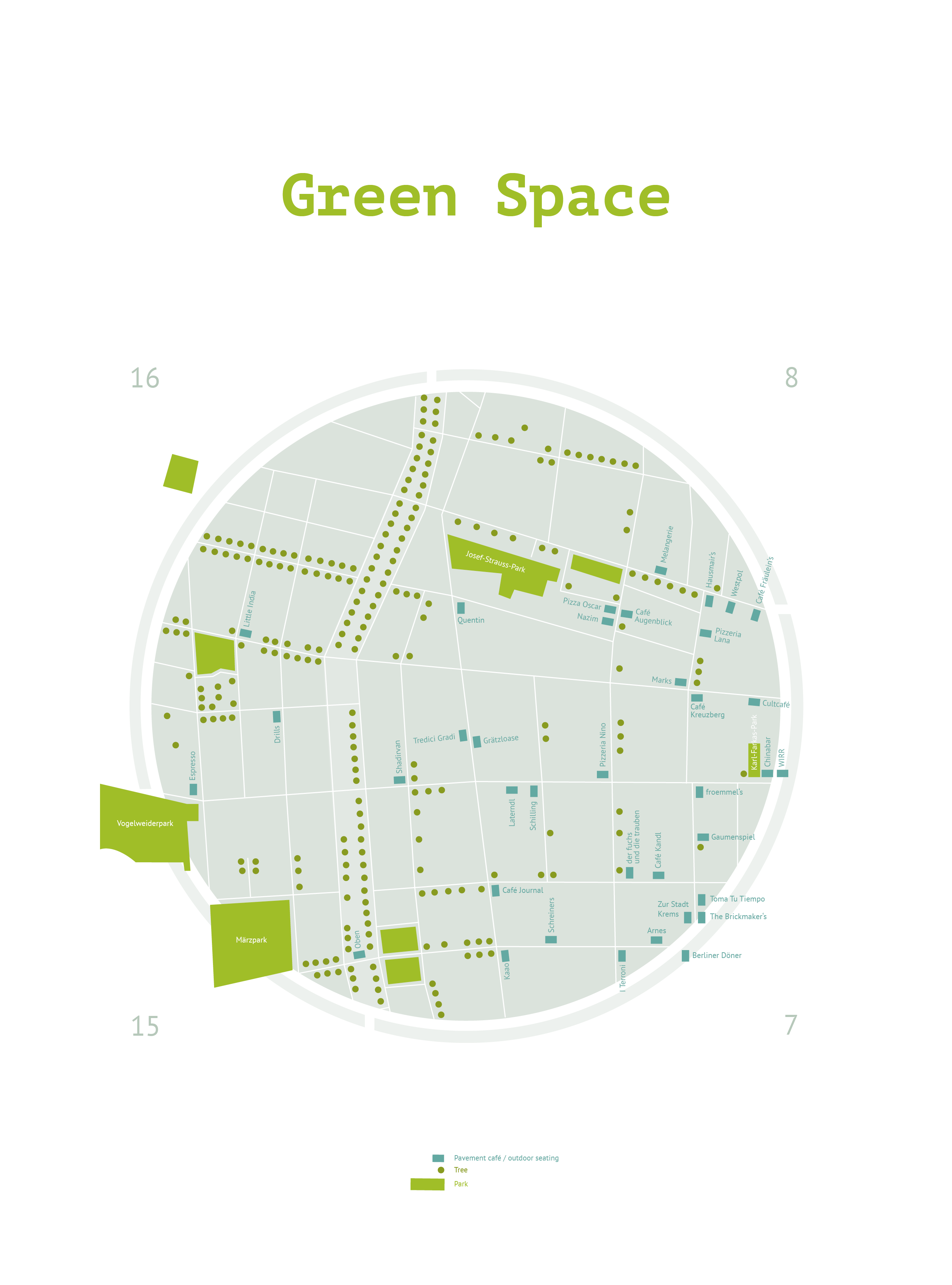
The third layer focused on accessible outdoor space, especially the contrast between “real” green spaces and Vienna’s more temporary or urban forms of outdoor use, such as Schanigärten (tables and chairs set up on the sidewalk in front of eating and drinking places.).
Again, I used my camera to document and locate these spaces, then related them back to their surroundings to understand how greenery shaped the feel of the neighborhood.
Solution
The final outcome consisted of four interconnected maps:
- one for green space
- one for traffic
- one for building character
- one final combined map that overlaid the layers
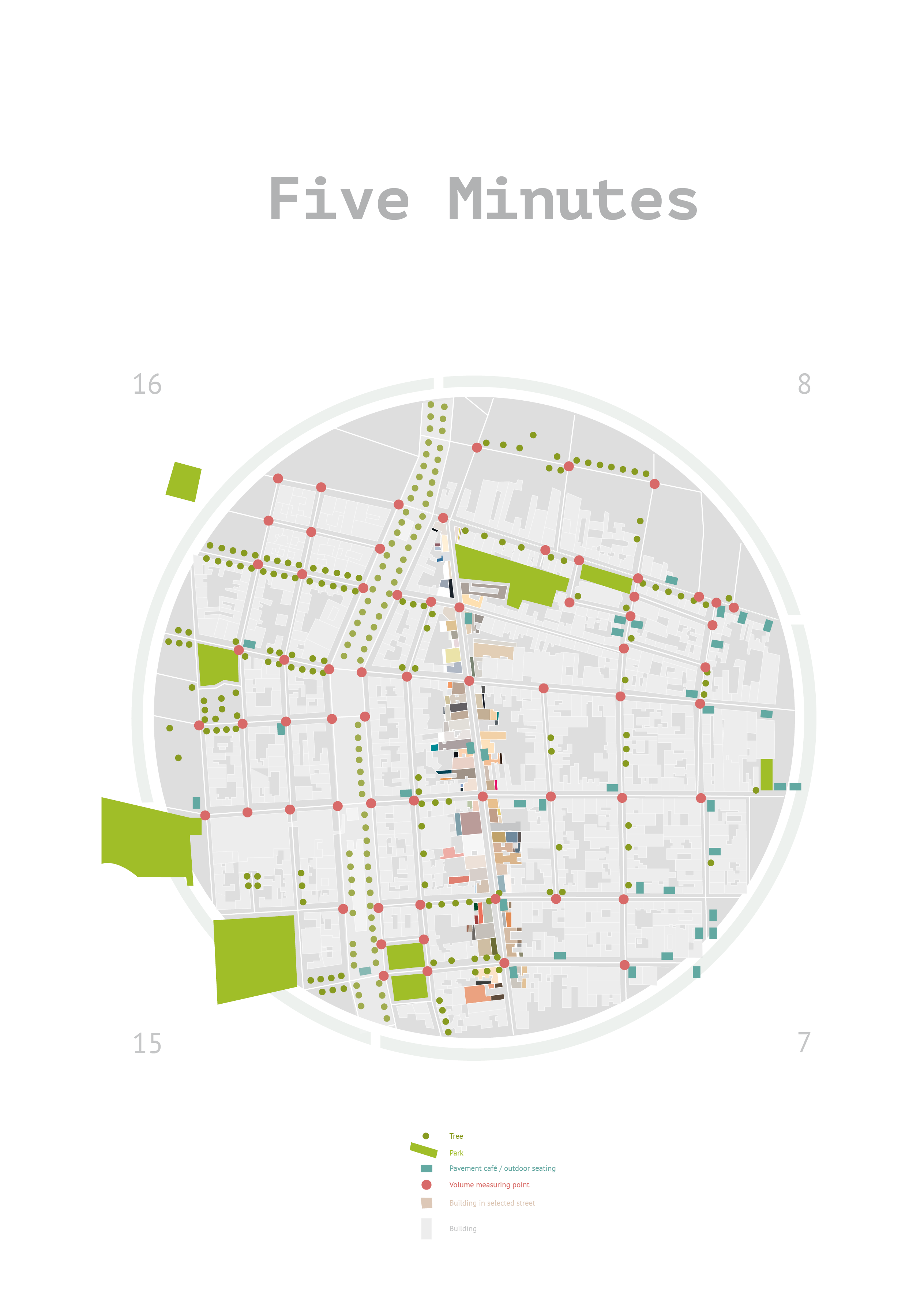
Each individual map could be read on its own, but their real value emerged in combination. The final composite showed that no single layer could fully describe the city. Urban character only became visible when greenery, traffic, and buildings were read together.
In addition, I designed a printed brochure as a physical takeaway featuring fold-out maps.
Learnings
1. Qualitative perception can be systematised.
Subjective experience doesn't need to remain vague. With the right structure, it can be documented, compared, and visualised.
2. A city is not just one dataset.
Traffic, facades, and greenery each reveal something, but none of them is enough on its own. Meaning appears through their relationship.
3. Information design can make atmosphere visible.
The project was strongest when it moved beyond pure measurement and showed how data can describe the character of a place, not just its components.